Dynamic Intuitionistic Fuzzy Soft Set-Based WASPAS Model for Multi-Criteria Decision Making in Renewable Energy Selection
DOI:
https://doi.org/10.59543/mxct6309Keywords:
Dynamic Intuitionistic Fuzzy Soft Set, WASPAS Method, Temporal AggregationAbstract
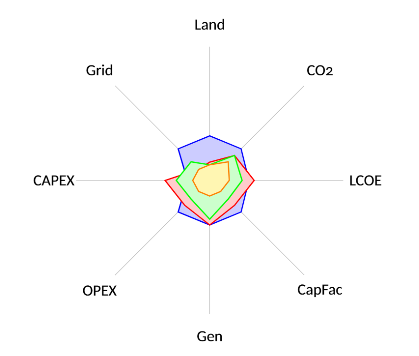
The nature of the multi-criteria decision-making problem is full of uncertainty in the expert decisions of the task as well as the changes in the technological performance over time, which represent the other characteristics of renewable energy planning. Nevertheless, several of the available fuzzy multi-criteria decision-making solutions are not dynamic in change and they fail to adapt to change over time. In order to overcome this weakness, this paper suggests a dynamic intuitionistic fuzzy soft set based WASPAS model to assess the renewable energy alternatives under uncertainty and time dynamics. The proposed method would incorporate the intuitionistic fuzzy soft set modeling and the WASPAS aggregation protocol in an attempt to model expert hesitation as well as synthesize multi-year appraisals by a recency-based temporal weighting. To show how the framework could be applied, a case study of the renewable energy planning in Pakistan is performed. There are four options that include solar, wind, hydropower, and bioenergy, which are analyzed in eight economic, environmental, and technical parameters, based on the expert ratings of 2021-2023. The findings show that the hydropower gives the best overall performance, then the wind, the solar, and the bioenergy. Sensitivity and comparative analyses also prove the viability and solidity of the obtained rankings. The advanced dynamic intuitionistic fuzzy soft set based WASPAS framework is a powerful decision-support system in the renewable energy planning process in the uncertainties and dynamic conditions and can be applied in other multi-criteria decision-making processes whereby the criteria and expert preference changes with time.
Downloads
Published
How to Cite
Data Availability Statement
The authors confirm that the data supporting the findings of this study are available within the article.
Issue
Section
License
Copyright (c) 2026 Sania Saleem, Maria Riaz, Fatima Razaq, Muhammad Saeed (Author)

This work is licensed under a Creative Commons Attribution 4.0 International License.
ABSJ is published Open Access under a Creative Commons CC-BY 4.0 license. Authors retain full copyright, with the first publication right granted to the journal.